


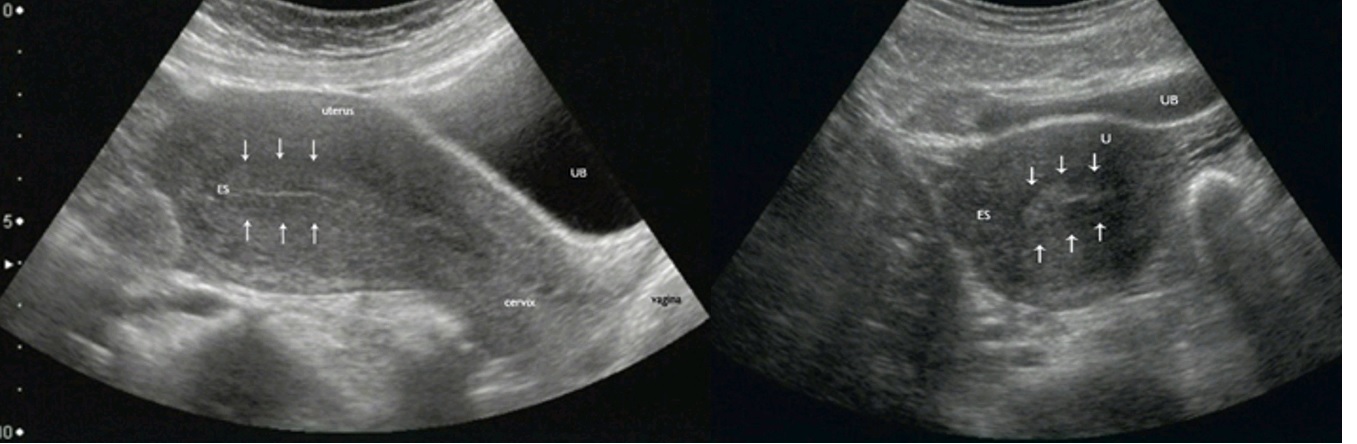
What is Pelvic Ultrasound Imaging?
Ultrasound is safe and painless, and it uses sound waves to create images of the inside of the body. Ultrasound imaging, also known as an ultrasound scan or sonography, is performed using a small transducer (probe) placed directly on the skin and ultrasound gel. High-frequency sound waves are transmitted from the probe through the gel into the body. The transducer collects the returning sounds, and a computer uses those sound waves to create an image. Ultrasound exams do not use radiation, so the patient is not exposed to radiation. Since ultrasound images are captured in real-time, they can show the structure and movement of the body’s internal organs, as well as blood flow through blood vessels.
Ultrasound imaging is a non-invasive medical test that helps doctors diagnose and treat medical conditions.
There are three types of pelvic ultrasound:
- abdominal (transabdominal)
- vaginal (transvaginal) for women
- rectal (transrectal) for men
A Doppler ultrasound exam may be part of a pelvic ultrasound examination.
Doppler ultrasound, also called color Doppler ultrasonography, is a special ultrasound technique that evaluates blood flow. It allows the doctor to assess blood flow in arteries and veins throughout the body, such as in the arms, legs, neck, brain (in infants and children), or various abdominal organs, including the liver, spleen, and kidneys.
What are the Common Uses of Pelvic Ultrasound?
In women, pelvic ultrasound is most often used to evaluate the uterus, cervix, ovaries, fallopian tubes (uterine tubes), and bladder.
Pelvic ultrasound exams are also used to monitor the health and development of an embryo or fetus during pregnancy. For more information, visit the Obstetric Ultrasound page.
Ultrasound exams can help diagnose symptoms experienced by women, such as:
- Pelvic pain (lower abdominal pain)
- Abnormal vaginal bleeding
- Other menstrual problems
- Palpable masses such as ovarian cysts and uterine fibroids
- Ovarian or uterine cancers
Transvaginal ultrasound is typically used to view the endometrium (lining of the uterus) and ovaries. Transvaginal ultrasound also evaluates the myometrium (muscle walls of the uterus). These exams are often performed to detect the following:
- Uterine anomalies
- Uterine adhesions
- Endometrial polyps
- Fibroids
- Cancer, particularly in patients with abnormal uterine bleeding
In men, pelvic ultrasound is used to evaluate the following:
- Bladder
- Seminal vesicles
- Prostate
Transrectal ultrasound is a specialized study that is often performed to provide a detailed evaluation of the prostate gland. This is done by inserting a specialized ultrasound transducer into the rectum. For more information, visit the Prostate Ultrasound page.
In both men and women, a pelvic ultrasound can help identify the following:
- Kidney stones
- Bladder tumors
- Other bladder disorders
In children, pelvic ultrasound can help evaluate the following:
- Pelvic masses
- Pelvic pain
- Ambiguous genitalia and pelvic organ anomalies
- Early or delayed puberty in girls
Doppler ultrasound can help doctors visualize and evaluate certain conditions, such as:
- Blockages in blood vessels
- Narrowing of blood vessels
- Tumors and congenital vascular malformations
- Reduced or absent blood flow to various organs
- Greater-than-normal blood flow to different areas, sometimes seen in infections
How Should I Prepare for a Pelvic Ultrasound?
You should wear comfortable, loose-fitting clothing for your ultrasound exam. You may need to remove all clothing and jewelry in the area being examined.
Ultrasound exams are highly sensitive to movement, and an active or crying child can prolong the examination process. To ensure a smooth exam, it is usually helpful to explain the procedure to the child before the exam. Bringing books, small toys, music, or games can help distract the child and make the time pass quickly.
Pelvic Ultrasound Prices 2026
In Istanbul, pelvic ultrasound prices vary from region to region and even from facility to facility within the same area. For more information about pelvic ultrasound prices, you can call 02126321059.