


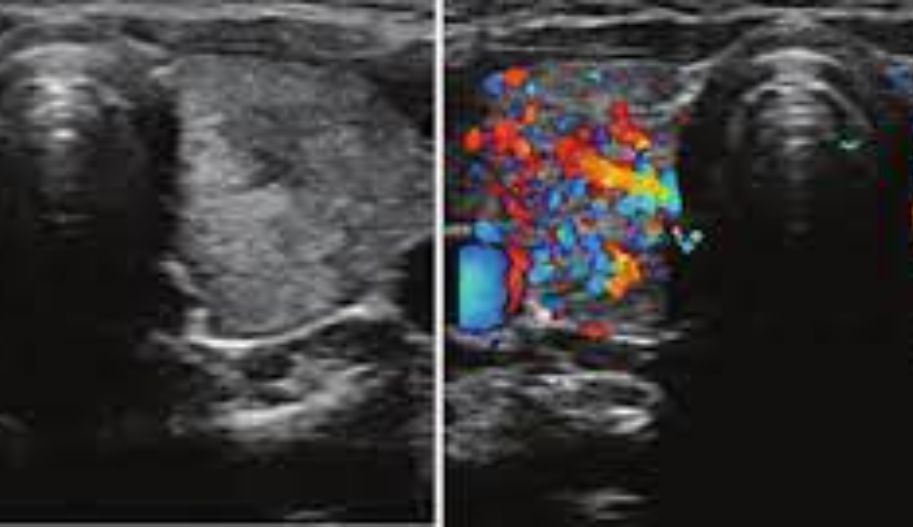
Carotid Vertebral Artery Color Doppler Ultrasound
Carotid vertebral artery color Doppler ultrasound is an excellent screening tool to assess whether carotid artery stenosis is hemodynamically significant. It is a crucial imaging method to be performed before angioplasty, endarterectomy, or stent placement.
Stroke is the third leading cause of death after heart disease and cancer. The most common identifiable cause of stroke is thromboembolic clots originating from the heart. Another cause is atherosclerotic plaque leading to carotid artery stenosis at the level of the carotid bifurcation, extending into the internal carotid artery.
The North American Symptomatic Carotid Endarterectomy Trial demonstrated the benefit of surgery in correcting hemodynamically significant carotid artery stenosis. It showed the benefit of endarterectomy in suitable patients with symptomatic stenosis of 70% to 99% in the internal carotid artery. The Asymptomatic Carotid Atherosclerosis Study evaluated the effectiveness of endarterectomy in patients with asymptomatic carotid artery stenosis of more than 60% and showed that the surgery reduced the risk of stroke in these patients.
ECST and NASCET
Two major studies demonstrated that endarterectomy provides significant advantages over medical treatment in reducing morbidity and mortality for symptomatic patients with significant stenosis. The European Carotid Surgery Trial (ECST) data showed an 18.6% reduction in the risk of major ipsilateral stroke in surgical patients with more than 80% stenosis over the follow-up period.
In the North American Symptomatic Carotid Endarterectomy Trial (NASCET), surgery reduced the risk of ipsilateral stroke by 17% in patients with more than 70% stenosis. The risk of death or stroke due to surgery was 7% in ECST and 5.4% in NASCET. Due to this small but real risk, more caution should be taken for endarterectomy in patients with lower-grade stenosis or asymptomatic patients with stenosis.
Endarterectomy provides marginal benefit for symptomatic patients with less severe stenosis, with an absolute risk reduction of 4.6% for patients with 50% to 70% stenosis (NASCET). However, no benefit was shown for lower-grade stenosis. For asymptomatic patients with more than 60% stenosis (NASCET), the absolute risk reduction from endarterectomy was only 3% over three years.
Indications for Carotid Vertebral Artery Color Doppler Ultrasound
Extracranial cerebral circulation ultrasound is primarily used for evaluating patients with symptoms such as amaurosis fugax and transient ischemic attacks (TIA), which may be caused by carotid artery disease. It helps identify patients with significant carotid stenosis who may benefit from surgery.
A general assessment to determine the extent of atherosclerotic disease and the localization of carotid artery branches is essential before focusing on a specific arterial segment. This initial analysis is performed in the transverse plane, starting from the proximal common carotid artery (CCA) and proceeding to the bifurcation level, then moving on to the internal and external carotid arteries (ICA and ECA, respectively). The ECA typically appears smaller in diameter and more medial and anterior, feeding the face, while the ICA tends to be larger and positioned posterior and lateral compared to the ECA. The CCA, ECA, and ICA are then scanned longitudinally to investigate the presence of plaque formation.
Carotid Vertebral Artery Color Doppler Ultrasound Prices 2026
For information on **Carotid vertebral artery color Doppler ultrasound prices 2026**, feel free to contact us.